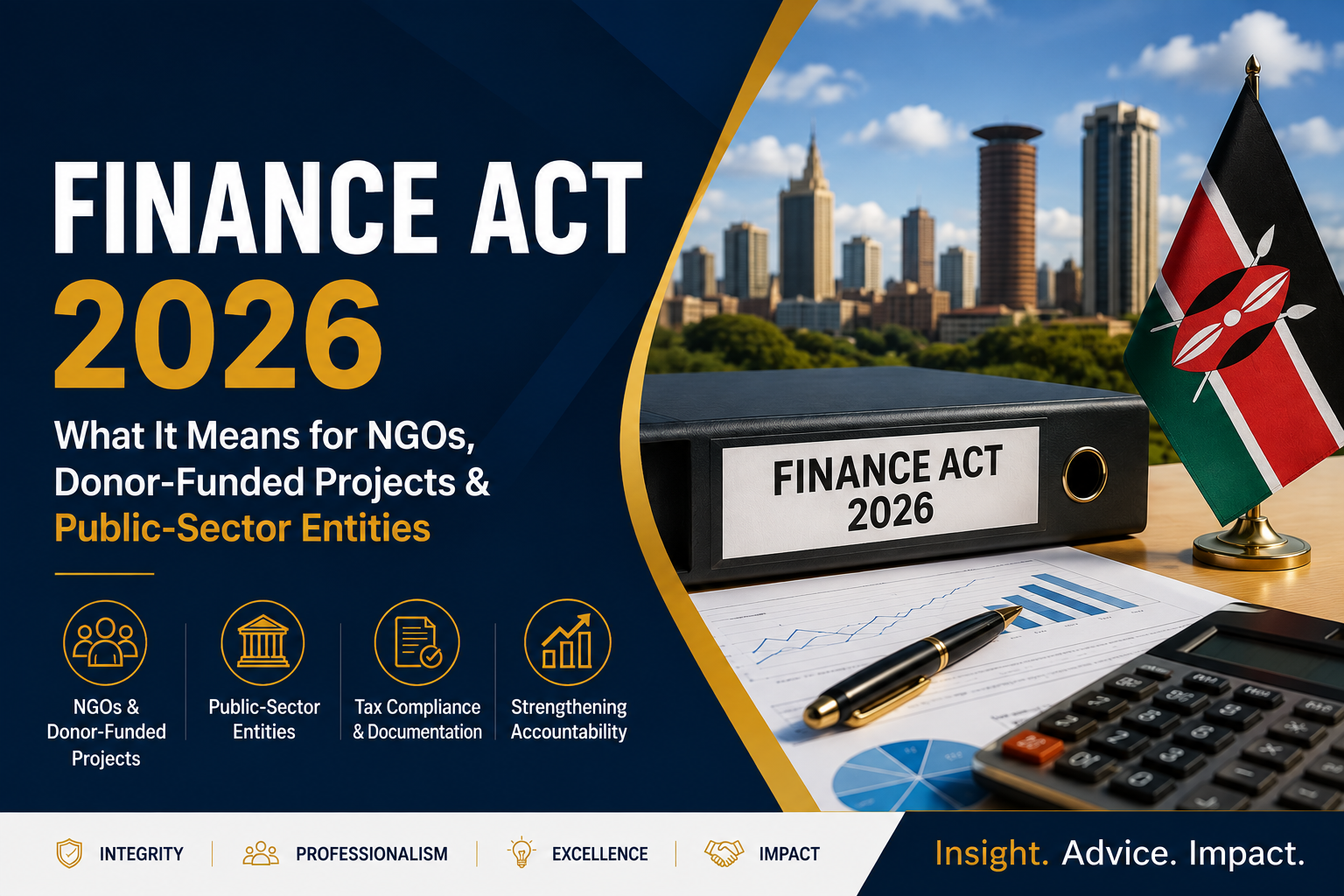
Donor-funded projects are increasingly expected to demonstrate measurable results alongside compliance. Strengthening financial systems, integrating oversight and managing risks proactively enables organizations to improve accountability, attract funding and deliver sustainable impact.
Donor-funded projects are increasingly expected to deliver not only compliance, but measurable and sustainable impact. While audits remain essential for accountability, they represent only one part of a broader effectiveness framework. Organizations that move beyond an audit-only mindset are better positioned to deliver results that matter to beneficiaries, funders and stakeholders alike.
Strong financial management systems, integrated oversight structures and proactive risk controls enable organizations to strengthen donor confidence, improve operational performance and position themselves for long-term funding sustainability.
Traditional compliance approaches often focus on preparing for periodic reviews rather than strengthening everyday financial management practices. While audit readiness remains important, it is no longer sufficient in environments where donors expect continuous accountability and performance visibility.
Organizations that embed compliance into routine operations reduce reporting errors, strengthen documentation quality and improve decision-making across project lifecycles.
Moving beyond reactive compliance allows organizations to strengthen both credibility and implementation effectiveness.
Maximizing impact begins with strong financial management systems that are integrated into day-to-day operations rather than treated as periodic requirements. Clear policies, practical tools and defined responsibilities ensure funds are used efficiently and in alignment with donor expectations.
Continuous monitoring of budgets, workplans and disbursements supports better planning, faster corrective action and stronger financial accountability.
Organizations with embedded controls reduce questioned costs, audit findings and funding interruptions.
Effective coordination between finance and program teams is essential for successful donor-funded project delivery. When these functions operate in isolation, reporting inconsistencies increase and implementation efficiency declines.
Integrated oversight ensures that financial decisions reflect operational realities and that implementation progress aligns with approved budgets.
Organizations that align finance and program functions strengthen both compliance performance and delivery outcomes.
Organizations operating in complex funding environments must continuously strengthen internal capacity to respond to evolving donor expectations. Compliance systems that rely on individuals rather than structured processes are difficult to sustain and scale.
Capacity strengthening ensures that compliance becomes institutional rather than reactive.
Stronger institutional systems support long-term funding eligibility and implementation reliability.
High-performing organizations identify and address risks before they appear in audit findings. A forward-looking risk management approach strengthens operational resilience and improves donor confidence.
Rather than responding to issues after they occur, proactive monitoring enables organizations to detect weaknesses early and implement corrective measures quickly.
Early risk identification reduces exposure and strengthens accountability across project portfolios.
Consistent documentation, clear audit trails and timely reporting are essential components of effective grant management. Transparent systems strengthen trust with donors, partners and stakeholders while improving institutional credibility.
Organizations with reliable documentation structures are better positioned to manage multiple funding streams simultaneously and respond efficiently to donor reviews.
Transparency is not only a compliance requirement—it is a signal of institutional maturity.
Ultimately, moving beyond the audit means shifting from a compliance-driven mindset to a performance-oriented approach. Financial systems should function not only as control mechanisms but as strategic tools that support implementation effectiveness and funding sustainability.
Organizations that strengthen financial controls, integrate oversight structures and manage risks proactively are better positioned to demonstrate value, attract funding with confidence and deliver lasting impact in the communities they serve.
Organizations managing complex donor portfolios often benefit from structured reviews of internal controls, reporting systems and grant risk exposure to strengthen long-term compliance readiness and support sustainable program growth.
M.N. Cliff and Associates LLP is a full-service audit, tax and advisory firm headquartered in Nairobi, Kenya. Established to provide practical and high-quality professional services, the firm supports organizations seeking trusted advisory, strong financial management and effective business solutions.
© 2026 M.N. Cliff and Associates LLP